When you think of the Penedès region in Catalonia, Spain, your mind probably jumps straight to sparkling Cava. But there is a quiet revolution happening in the rocky, limestone soils of the Bitlles River Valley. At the forefront of this movement is
Celler Pardas.
Founded in 1996 by growers Ramon Parera and Jordi Arnan, Celler Pardas is dedicated to a singular mission: producing strictly still, terroir-driven wines using radical, non-interventionist farming. They don’t plow the soil, they don’t irrigate, and they rely entirely on the wild, rugged personality of their land.
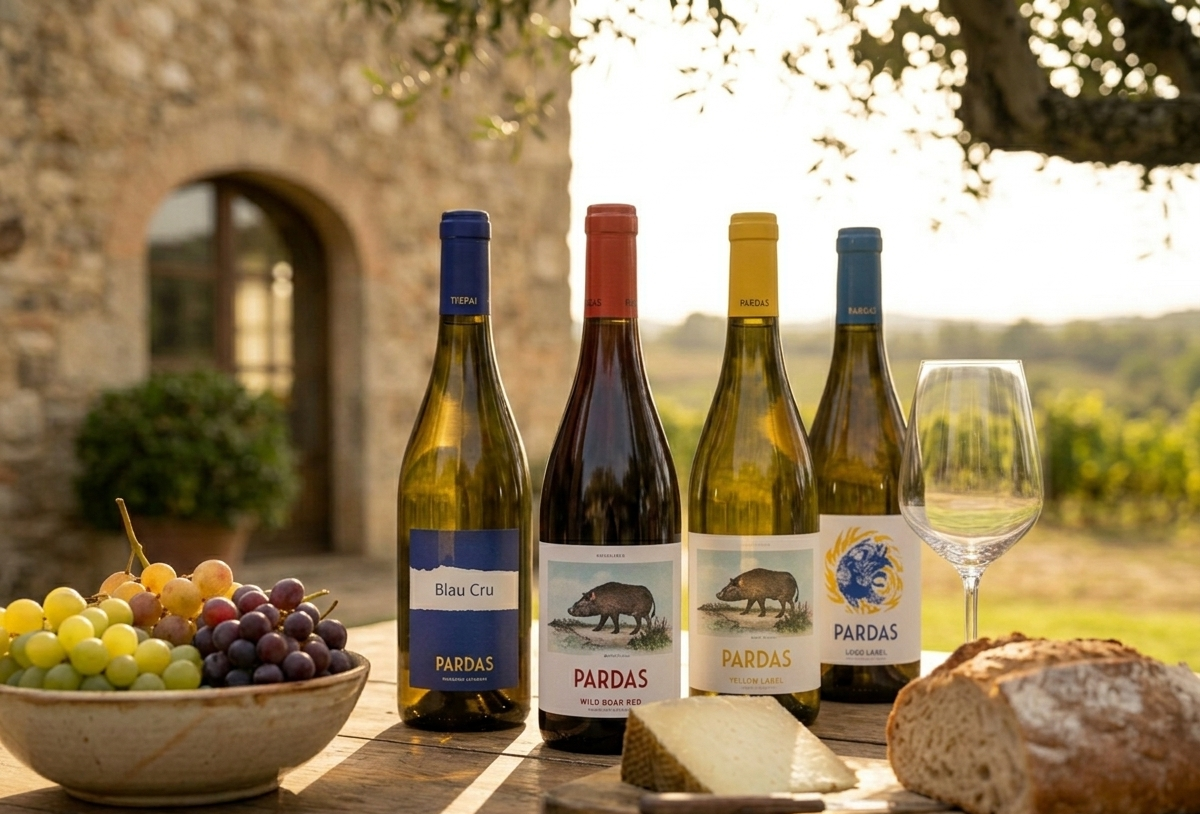
If you want to taste the authentic, untamed soul of Catalonia, here are four spectacular bottles from Celler Pardas you need to try, complete with their unique stories, flavor profiles, and perfect pairings.
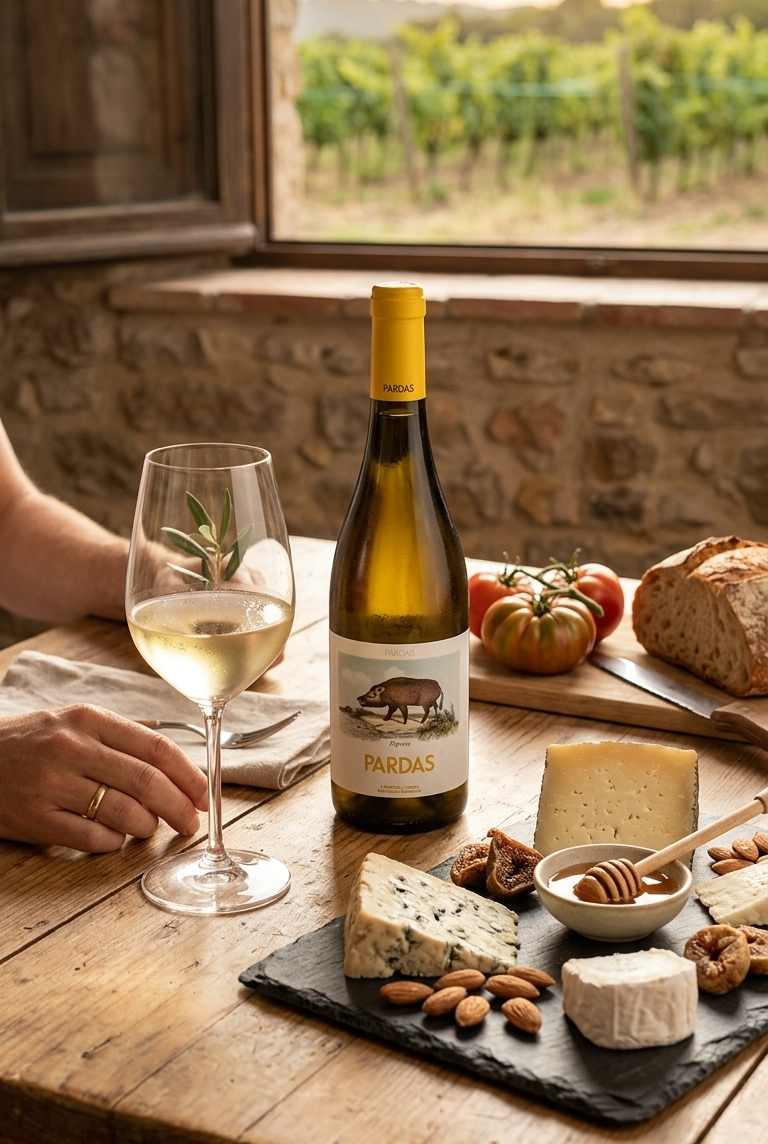
1. Celler Pardas Rupestris Blanc
The Spirit of Rupestris: The wine is crafted to evoke primitive, rustic, and ancestral qualities, reflecting the raw strength of stone and the purity of the earth.
The Terroir: The traditional white grape varieties are grown at Finca Can Comas on limestone slopes, where vines root directly into the bedrock (petrocalcic or tapassot). In these shallow soils, the vines must work intensely during the summer to source water and minerals, an effort that shapes the wine’s character.
Quality & Craftsmanship: Positioned as a grass-roots wine for Celler Pardas, Rupestris is made with a singular focus on high quality, driven by the winemakers’ passion and devotion.
The Blend & Maturation: It achieves its elegant balance and true expression of the vineyard through a specific blend (coupage) of Xarel·lo, Malvasia de Sitges, Macabeu, and Xarel·lo Vermell, followed by a brief maturation period in chestnut barrels.
We have worked hard, just enjoy it.
- Tasting Notes: Bright white flowers, ripe stone fruits, and a distinct, crunchy herbaceous character, rounded out by a signature salty, limestone finish.
- The Perfect Food Pairing: Garlic Butter Prawns or Grilled Sea Bass. The wine’s bright, saline minerality slices right through the richness of the seafood, while its herbaceous notes echo fresh Mediterranean herbs.
💡 PRO TIP: Don’t serve this bottle straight out of an ice bucket! Let it warm up slightly to around 10°C–12°C (50°F–54°F). If it’s too cold, the gorgeous, subtle aromas of the Xarel·lo grape and the complex textures from the lees aging will be completely muted.
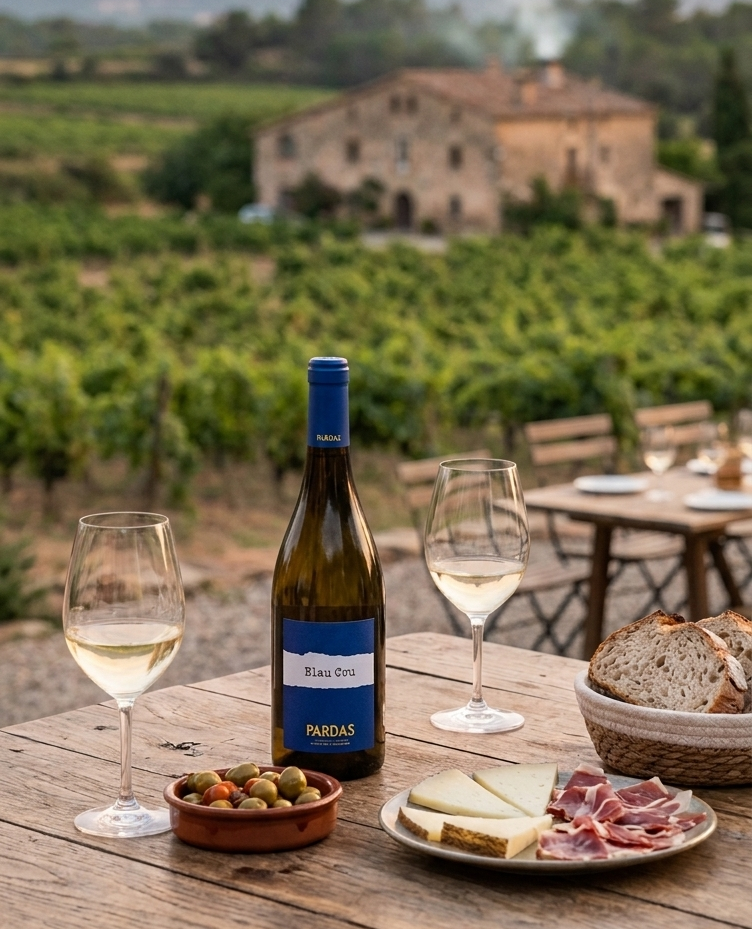
2. Celler Pardas Blau Cru
Origins & History: Malvasia de Sitges is an ancient, historic grape variety with roots traced back to Greece (potentially Crete or Monemvasia). Spread across the Mediterranean by the Greeks, it eventually reached the Catalan coasts.
Survival in the Garraf: For centuries, the grape existed in relative obscurity within the Garraf region, overshadowed by other prominent Penedès varieties despite its exceptional personality, aging potential, and “Queen-like” quality.
The Pardas Adventure (2007): The winery began its journey with the grape in 2007, taking a risk by bringing vine shoots from the coastal Garraf to graft them inland at the Can Comas estate.
Evolution to Blau Cru (2014): Initially used as a blending grape for Rupestris, the winery launched Blau Cru as a monovarietal in 2014 after mastering its cultivation.
A New Aesthetic: Prior to this, Pardas only produced white wines from Xarel·lo (known for its austerity and minerality). The introduction of Malvasia de Sitges brought a brand new aesthetic to the winery, offering lush fruit and a touch of coastal saltiness.
- Tasting Notes: Intensely aromatic. Bursting with lush notes of ripe peach, apricot, and lemon zest, backed by an unexpected, razor-sharp acidic drive and a mineral-rich backbone.
- The Perfect Food Pairing: Thai Green Curry or Dim Sum. Malvasia de Sitges has the aromatic intensity to stand up to bold Asian spices, ginger, and lemongrass without being overwhelmed.
💡 PRO TIP: This is a stellar “chameleon” wine for dinner parties. If you have a menu that transitions from a light salad to a spicy starter, Blau Cru seamlessly bridges the gap because it has the aromatics of a sweet wine but drinks bone-dry.
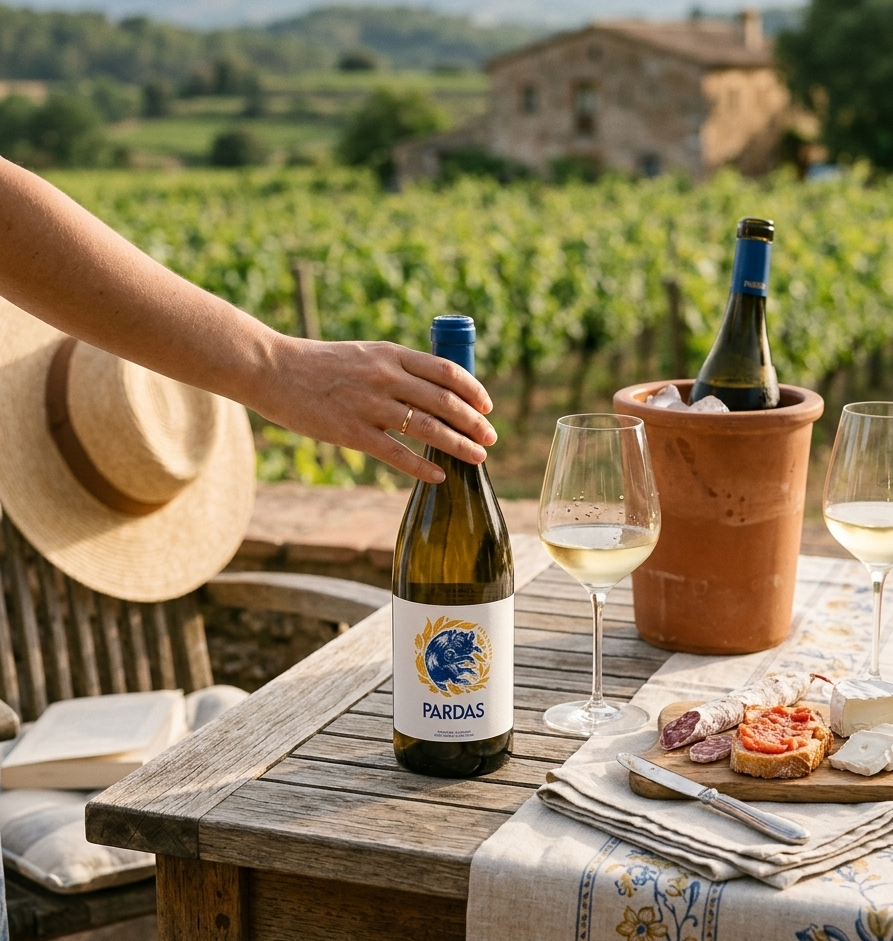
3. Celler Pardas Pell a Pell
A Unique Exception: While all other Pardas white wines are directly pressed, Pell a Pell is the sole exception.
An Orange Wine Tradition: It is an “orange” white wine fermented and macerated with its own skins. Though not part of the modern mainstream in the region, skin-contact orange wines are rooted in local farmhouse traditions.
Production Method
The winemaking process is highly elemental and minimalist, relying on traditional techniques:
- Crushing: Whole grapes are foot-trodden by a person inside the tank.
- Fermentation: The tank is sealed for a 12-day spontaneous fermentation using native yeasts from the estate (la finca), followed by malolactic fermentation.
- Maceration: The wine undergoes a total of 15 days of skin maceration without intervention.
- Pressing: Once fermentation is complete, the wine is bled and pressed using a vertical press.
A New Expression: This traditional, low-intervention process offers an entirely different expression of the classic Xarel·lo grape variety.
- Tasting Notes: A beautiful amber hue. It offers playful aromas of dried orange peel, bruised apple, and wild earth, featuring a light, grippy tannic structure and a pleasantly tart, bitter finish.
- The Perfect Food Pairing: Roasted Pork Belly or Charcuterie Boards. The gentle tannins and refreshing astringency act like a palate cleanser against rich fats, cured meats, and funky aged cheeses.
💡 PRO TIP: Treat Pell a Pell more like a light red wine than a white wine. Serve it cellar temperature—around 12°C–14°C (53°F–57°F)—and give it 15 minutes in a decanter before serving to let the complex, oxidative aromas unfurl.
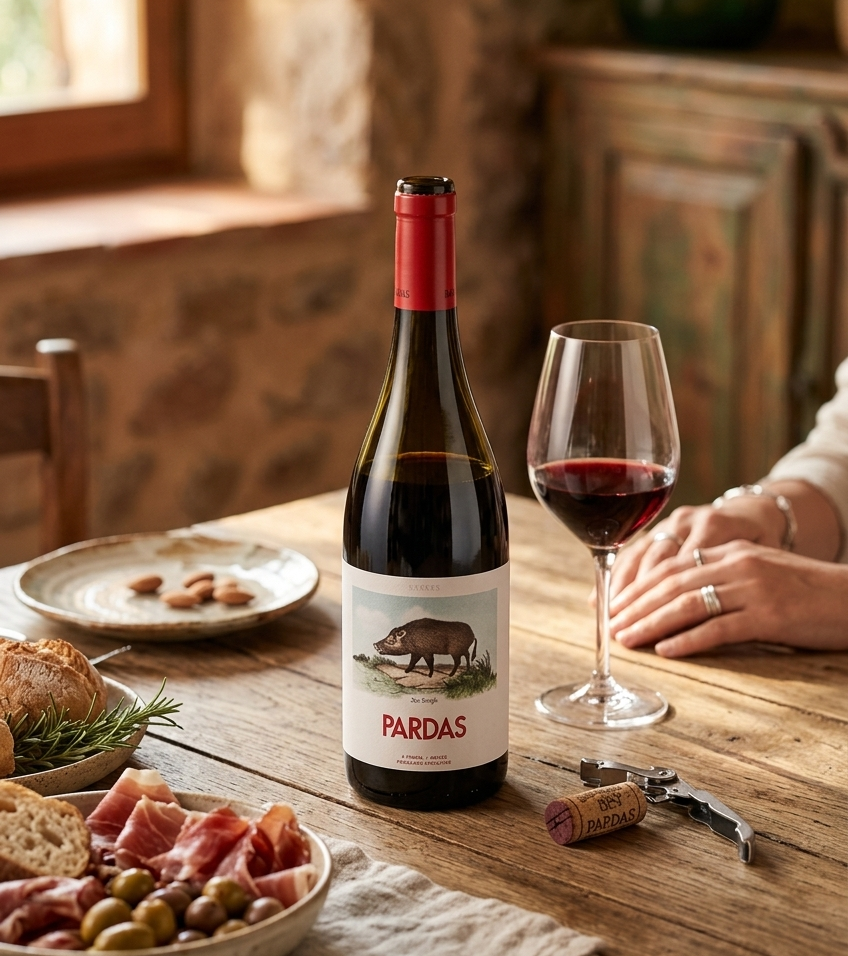
4. Celler Pardas Sus Scrofa
A 20-Year Dedication: Celler Pardas has spent two decades selecting old Sumoll vineyards across Catalonia, initially sourcing grapes from the North Penedès and Anoia River basin to make their Collita Roja and Rosat de Sumoll, before establishing their own Sumoll vineyards at the Can Comas property.
Total Craftsmanship: Unlike their older sourced vineyards, Sus Scrofa is entirely the winery’s own creation. They meticulously controlled every variable—from site selection, soil, and orientation to rootstocks, pruning, and low-intervention, ecological viticulture.
Pure, Unaged Expression: The wine is crafted through a delicate harvest and vinification process with no aging, designed to deliver a direct, honest, and natural expression of the Sumoll grape.
The Result: A vibrant, fruit-forward wine (“a wine festivity”) meant to be simple, hard-earned, and purely enjoyed.
- Tasting Notes: Vibrant and crunchy. Exploding with fresh red berries (cherry, wild strawberry, raspberry) mixed with wild Mediterranean herbs like lavender and rosemary, ending with an energetic, high-acid finish.
- The Perfect Food Pairing: Traditional Catalan Botifarra (Sausage) or Mushroom Risotto. The wine’s high acidity and earthy herb notes cut through the savory fat of grilled sausages and beautifully complement the earthiness of wild mushrooms.
💡 PRO TIP: Pop Sus Scrofa in the fridge for about 20 to 30 minutes before opening it. A slight chill accentuates its bright, crunchy red fruit flavors and makes it one of the most incredibly refreshing, chuggable summer red wines you will ever experience.
Final Thoughts
Celler Pardas proves that Penedès is capable of producing still wines with world-class depth, tension, and personality. Whether you are diving into the aromatic history of the Blau Cru or embracing the wild side with the Sus Scrofa, these bottles bring a genuine piece of the Catalan landscape right to your glass.
Have you tried any skin-contact or indigenous Catalan varieties before? Which of these bottles are you adding to your wishlist? Check it out!